Best orthopedic dog beds for senior dogs: what actually matters for achy joints
Soft and cozy isn't the same as supportive. Here's what actually matters in a bed for a stiffening older dog — from one owner who's bought a few and learned a thing or two.
On this page
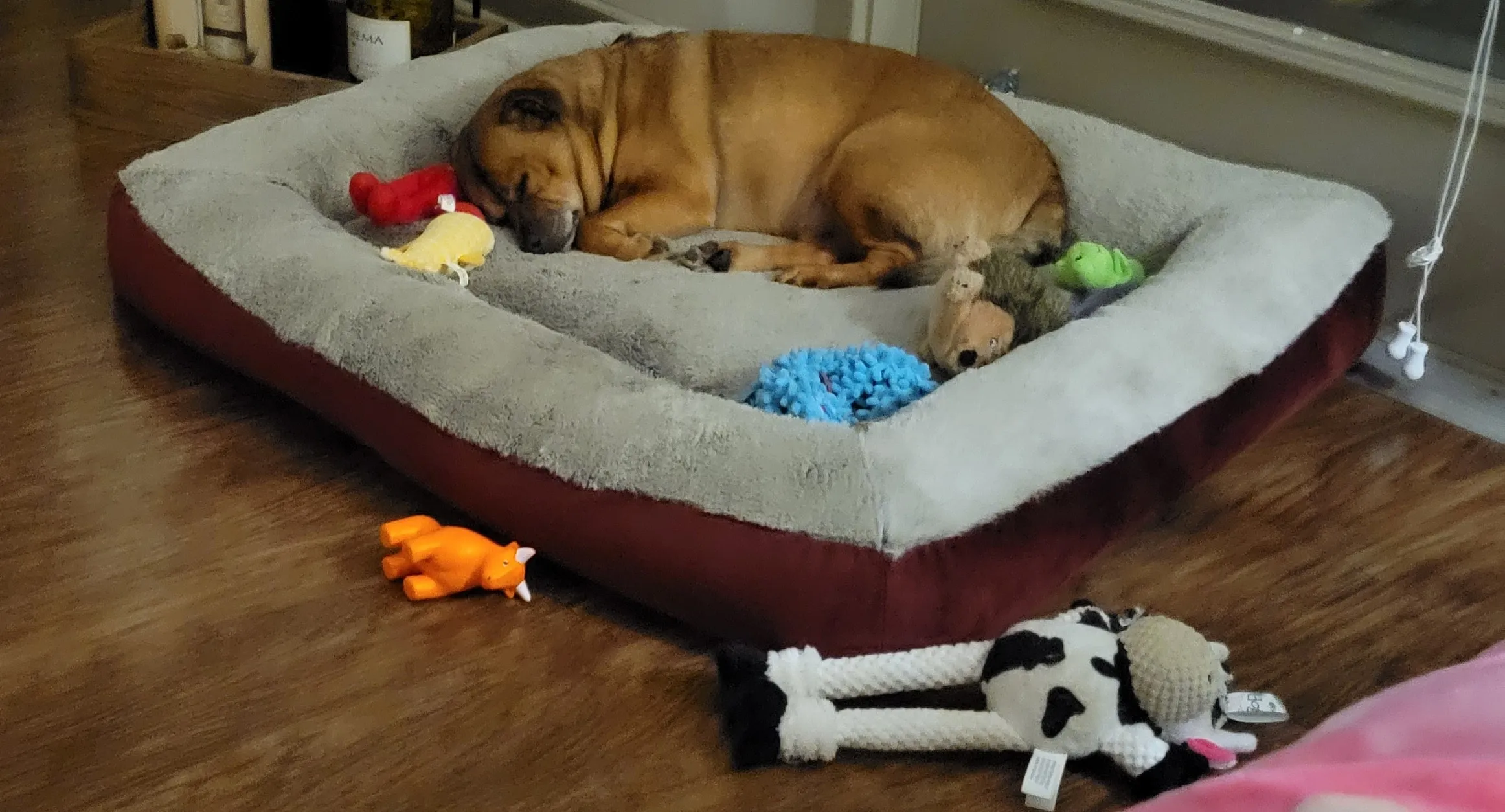
I’ve bought several dog beds over the past couple of years, and right now my thirteen-year-old, Chief — a 38-pound Mountain Cur and Pekingese mix — has two of them. He uses them. Not religiously, though: plenty of evenings he flops down on the floor beside one of them instead of on it, and for a while that puzzled me. Was the bed wrong? Was he uncomfortable?
So I looked into it, and the real answer is: probably a mix of ordinary things, none of them alarming. This guide is what I wish I’d known before I started buying — what actually matters in a bed for an aging dog, what I’d weigh differently now, and why your dog might walk past a perfectly good bed to lie on the hardwood.
A quick note before the beds
A supportive bed is about comfort — giving stiff joints a softer, warmer place to rest than a hard floor. It isn’t a treatment for arthritis or anything else. If your dog’s stiffness is new, getting worse, or paired with trouble standing up, that’s worth raising with your vet — a bed makes life more comfortable, but it doesn’t replace that conversation. With that said, here’s what I’ve learned.
What I actually use (and what I’d weigh differently)
I’ll be straight about my own beds, because it makes the rest of this more useful. What Chief has are two soft, bean-bag-style Bedsure beds (the Comfy Fit style). They’re affordable, the covers come off and wash easily, and Chief is happy to flop on them — so as comfy lounging cushions, they’ve done fine.
But here’s the real part: a soft, sink-in cushion isn’t the same thing as firm orthopedic support. When I bought them, I was thinking “soft and cozy.” Knowing what I know now about Chief’s stiffening joints, I’d weigh that differently — a stiff older dog is often better served by a firmer surface that holds them up than by a plush one they sink into, because sinking can actually make getting up harder. My beds are good cushions; they’re not really orthopedic beds in the joint-support sense. If you’re buying specifically for an achy senior dog, that’s the single thing I’d think harder about than I did.
What to look for in a bed for an older dog
Firm, supportive cushioning. This is the big one for a senior dog. You want a bed that holds your dog up rather than letting them sink to the floor through a thin or saggy pad. Solid, dense foam tends to do this better than loose fill. “Orthopedic” gets stamped on a lot of products, so look past the label to the actual thickness and firmness.
A low, easy entry. A tall-walled bed your dog has to climb into defeats the purpose for a stiff dog. A low front edge — or a flat mattress-style bed — is much easier to step onto.
A raised edge with a low entry point. One thing I’ve noticed with Chief: he likes to scootch up against something vertical and rest his back or head on it. A bed with a raised bolstered border gives him that edge to lean into, and he settles more easily on one than on a flat pad. The catch is that a high wall all the way around is harder for a stiff dog to climb over — so the sweet spot is a bolstered bed with one open or low side for easy stepping in. Best of both: support to lean on, and no wall to clamber over. If your dog tends to wedge himself against the couch arm, a wall, or YOU to sleep, this style is worth a look.
Temperature. Dense memory foam can trap heat, which matters in a warm home (I’m in Texas, so this is real). If your dog seems to seek cooler spots, look for gel-infused or open-cell foam, or a breathable cover. Looser fill breathes more.
A washable, removable cover. Older dogs have accidents, drool, and shed. A zip-off, machine-washable cover isn’t a luxury — it’s the difference between keeping the bed and tossing it. A waterproof inner liner helps too.
The right size. Measure your dog stretched out and add a few inches. Stiff dogs sprawl rather than curl, so size up if you’re unsure.
A non-slip bottom. A bed that slides when your dog steps onto it will spook a cautious senior dog — and undo the comfort you were going for.
Will my dog actually use it? (Why dogs pick the floor)
This is the part that surprised me, so it’s worth sharing. When a dog lies on the floor next to a perfectly nice bed, it’s usually telling you something specific — not being stubborn or ungrateful. The common reasons:
Heat. This is the most common one. A surface that traps body heat gets uncomfortable, so the dog seeks a cooler spot — bare floor, tile, a draft. Foam beds are the usual culprits here.
Firmness preference. Some dogs simply prefer a firmer surface than a soft bed offers — a firm floor can feel better to tired muscles than sinking into plush.
Closeness. Often the sweetest reason: dogs lie beside your bed or your feet just to be near you. Chief doing this isn’t him rejecting his bed so much as choosing me — which, honestly, I’ll take.
Worth a vet’s ear, in an older dog: if the floor-preference shows up alongside new trouble getting up, restlessness, or difficulty settling, that can point to discomfort worth checking. It’s not a reason to panic — just a reason to mention it at the next visit.
If you think it’s the bed itself, the fixes are simple: try a firmer or cooler bed, place it where your dog already likes to sleep, and add a familiar blanket on top so it smells like home.
A quick guide to bed types
| Bed type | Best for | Watch out for |
|---|---|---|
| Firm orthopedic foam Best for stiff joints | Older dogs with achy joints who need real support | Heavier and pricier; cheap "foam" can be thin and bottom out |
| Gel / cooling foam | Dogs that sleep hot, or warm climates | Costs more; cooling effect varies by product |
| Bolster bed | Dogs who like to rest their head on a raised edge | The walls eat usable surface; measure the flat area |
| Soft poly-fill ("bean-bag" style) | Cozy lounging; budget-friendly | Soft is not the same as supportive — can sink for a stiff dog |
Always check the size chart and your own dog's needs before buying.
None of these is “the best” for every dog — it depends on your dog’s joints, your climate, and where they like to sleep. For a stiff senior dog specifically, I’d start by taking firm support and an easy, low entry seriously, and treat softness as a nice-to-have rather than the goal.
Common questions
For an older dog with achy joints, the most important quality is firm, supportive cushioning that doesn't bottom out — so the dog is resting on support, not sinking to the floor through a thin pad. A soft, plush bed feels nice but can actually be harder for a stiff dog to get up from. A bed is a comfort and access aid, not a treatment — if your dog has diagnosed arthritis or you suspect joint pain, your vet is the right person to guide the bigger picture.
It's usually the bed, not stubbornness. The common reasons are temperature (some foams trap heat, so a dog seeks a cooler spot), firmness (some dogs prefer a firmer surface than the bed offers), and plain closeness — dogs often lie beside your bed or feet simply to be near you. In an older dog, if floor-preference comes alongside trouble getting up or settling, it's worth mentioning to your vet.
Memory foam is known to trap body heat, so in a warm home or for a thick-coated dog it can run hot. If heat seems to be the issue, look for gel-infused or open-cell foam, or a bed with a breathable, cooling cover. Loose poly-fill ("bean-bag" style) beds tend to breathe more than a dense foam slab.
Measure your dog stretched out, nose to tail, and add a few inches. Stiff older dogs like to sprawl rather than curl, so if you're between sizes, size up — a dog that has to fold to fit won't be comfortable.
Adam
Writer and senior-dog owner
I'm not an expert — I'm an owner. Everything here comes from real life with my senior dog and careful research, written plainly and honestly.
Keep reading
 Guide
Guide Fish oil for senior dogs: the joint supplement with real evidence behind it
Omega-3 fish oil is one of the few joint supplements with genuine research behind it for older dogs — but the details matter. Here's what the evidence says, how it's dosed, and what to check before you buy, always with your vet.
 Guide
Guide Is pet insurance worth it for an older dog? The real answer — and why I haven't bought it for Chief
A straight look at pet insurance for senior dogs: what it won't cover, what it still can, and a simple way to decide — from someone weighing the same question for his own 13-year-old.
 Guide
Guide Glucosamine for senior dogs: the real answer, and what giving it to my dog was actually like
A straight look at glucosamine joint chews for older dogs — what the research actually says (it's more mixed than the labels suggest), plus my real experience giving them to my 13-year-old.