Signs your senior dog is slowing down — and when it's worth a call to the vet
The quiet, ordinary signs of an aging dog — told from inside it, with my own old boy — plus a clear guide to telling normal aging from the things worth checking.
On this page
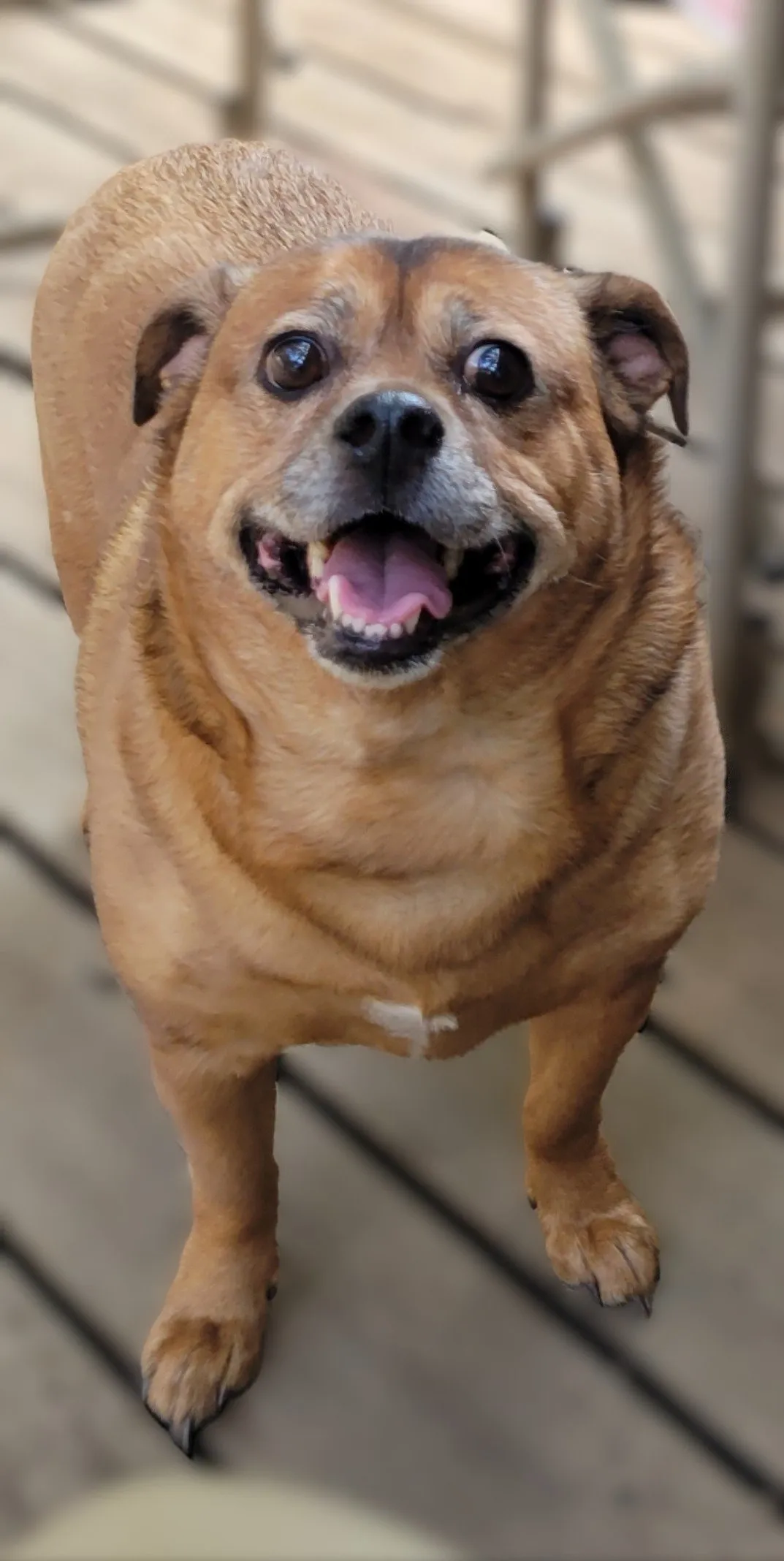
My dog Chief is thirteen — a 38-pound Mountain Cur and Pekingese mix — and I’ve been watching him get old in a hundred small ways. The one that made me laugh, and then made me a little wistful, is the rabbits. We’ve always had rabbits hanging around the yard, and Chief used to go after them. Now he darts a few paces, then just stops and watches them, intently, like he’s trying to startle them rather than actually catch one. (I’m honestly not sure what he’d do if he ever caught one.)
The other one is our walks. He stops to sniff constantly now — so much that I half-wondered if he was stalling on purpose to keep the pace slow. He’s not that calculating, it turns out. But the slowdown is real, and once I started paying attention, I realized it wasn’t just one thing. It was a lot of small things, all at once. This is what I’ve noticed, what I’ve learned about which parts are normal, and where I’ve landed on when it’s worth calling the vet — written as someone living it, not as a substitute for one.
What I’ve noticed in my own dog
None of these arrived with a bang. They crept in, and one day they added up.
- He sleeps more, and deeper. Long naps, harder to rouse.
- He’s slower on walks, and sniffs everything. The plodding, stop-and-sniff pace I mentioned — shorter routes, more rest stops.
- His eyes look cloudier than they used to.
- His hearing seems to be going. More “selective listening” — though some of that may be that he genuinely doesn’t hear me.
- He’s slower to recognize me waking up — a beat of “who’s there?” before the tail starts.
- More accidents in the house than there used to be.
- He’s stiff after lying down for a while, especially getting up.
- Less interested in play than the younger Chief would’ve been.
- The rabbits — the half-chase that’s really just a watchful dart.
Reading that list back, it looks like a lot. And it is. But almost every item on it is something dogs commonly do as they age — which is exactly why the next part matters.
Normal aging vs. worth a vet’s eyes
Here’s the truth I had to sit with: a lot of “he’s just getting old” is real and normal — but not all of it is, and from the couch you genuinely can’t always tell the difference. That’s not me being dramatic; it’s what vets say plainly. Senior behavior changes are often driven by treatable conditions or hidden pain, not simply age — and the earlier some of them are caught, the more can be done to keep a dog comfortable.
Usually just normal aging:
- A gradually slower pace and more sniffing on walks
- More sleeping and a lower energy level
- A bit more “selective” hearing, and graying around the muzzle
- Less interest in vigorous play
- Taking it easy on jumps they used to make without thinking
Worth a vet’s eyes — not because they always mean trouble, but because they’re the changes vets specifically don’t want written off as “just old age”:
- Stiffness, reluctance to jump, subtle limps — possible joint pain, which dogs hide well. (This is where Chief’s stiffness and that half-chase really belong.)
- Cloudy eyes — sometimes harmless lens aging, sometimes not; worth checking.
- Confusion, pacing, staring, seeming lost in familiar rooms — can be early cognitive decline, which is easier to help when caught early.
- New house accidents — can be ordinary, or a sign of something treatable.
- Anything sudden, or quickly getting worse — sudden changes are the clearest “call the vet” of all.
The pattern that should prompt a call isn’t any single item — it’s new, worsening, or stacking up. Which, looking at my own list, is a fair description of where Chief is.
Where I’ve actually landed (and what I’m doing about it)
I’ll be straight: I haven’t taken Chief in specifically for this slowdown yet. Writing this page is part of what’s pushing me to. Several of his changes — the cloudy eyes, the accidents, the stiffness — are on the “worth a vet’s eyes” list, and the right thing for me to do is book a senior wellness check rather than keep filing it all under “he’s just old.” If you’re reading this and recognizing your own dog, that’s the nudge for both of us. A check-up isn’t admitting something’s wrong; it’s the thing that answers the question.
In the meantime, the practical changes that have helped are the gentle ones: shorter, more frequent walks at his pace (and letting him sniff — it turns out that’s good for his aging brain, not just stalling), and making the places he loves easier to reach. If getting onto the couch, the bed, or into the car has gotten hard for your dog too, that’s its own rabbit-hole — I wrote up what I’ve learned about ramps and stairs and about choosing a supportive bed separately.
A gentle word, owner to owner
Watching a dog you love get old is its own quiet kind of grief, and it usually starts long before anything is really wrong — in the small moments, like a rabbit that doesn’t get chased anymore. I think it helps to name that, rather than pretend it’s nothing. None of this means the hard chapter is here; most of it just means your dog is getting older, the way they’re supposed to. The kind thing — for them and for you — is to stay curious about the changes instead of frightened by them, keep the vet in the loop, and make the ordinary days as comfortable as you can.
If you’re further along than that and genuinely worried something is wrong, please don’t take your answers from a website — mine or anyone’s. Call your vet. That’s what they’re for, and it’s the one piece of advice on this whole page I’d stake anything on.
Common questions
Very. Older dogs tend to plod rather than pull, and to stop and sniff more often — it's a natural way to pace themselves and stay mentally engaged, and the daily chance to get outside and sniff matters even when walks get shorter. That said, a slower pace and more sniffing can also be an early, subtle sign of joint discomfort, since dogs tend to quietly carry on rather than yelp. If the slowdown is new or marked, it's worth a vet's eye.
Frankly, you often can't from the couch — and that's the whole point of a vet. Gradual, mild changes that fit the picture of "getting older" are usually just that. The things worth a professional look are changes that are sudden, that are getting worse quickly, or that fall into the categories vets specifically flag — confusion or seeming lost in familiar places, cloudy eyes, new house accidents, or signs of pain. A senior check-up exists precisely to answer "is this normal, or treatable?"
A good rule of thumb is to book a visit if a change is new or worsening, if several changes are stacking up at once, or if anything on the "worth a vet's eyes" list below shows up. And even with no specific worry, a senior wellness check-up once or twice a year is reasonable — a lot of age-related conditions are easier to help when caught early.
It depends on size and breed — bigger dogs age faster — but many dogs are considered senior somewhere around 7 to 10, and "geriatric" later than that. Age in years matters less than the changes you're actually seeing.
Adam
Writer and senior-dog owner
I'm not an expert — I'm an owner. Everything here comes from real life with my senior dog and careful research, written plainly and honestly.
Keep reading
 Guide
Guide Support harnesses and lifting slings for senior dogs: helping them up without hurting either of you
When an older dog struggles to stand, climb stairs, or get into the car, a support harness or sling can give you a safe way to help. Here's what the different types do, how to choose, and the vet check that should come first.
 Guide
Guide Best dog ramps and stairs for senior dogs: help them get around again
A straight guide to choosing a ramp or steps for an aging dog — what actually matters, and what I'm weighing for my own 13-year-old, Chief.
 Guide
Guide How to make your home easier for a senior dog: a real setup
Practical, low-cost ways to make a home gentler on an aging dog — the changes I've actually made for my own 13-year-old, the ones I haven't needed yet, and the one worth asking your vet about first.